Saturday, 9 October 2010

Behind the scenes at the museum. What happens when the animals try to leave the building?


They get treated with preservatives and cleaning agents, then wrapped in plastic, taped up and then frozen. There is a big freezer in the basement somewhere, and that is where they will go, whilst the museum gets a new makeover and a new exhibit space that is slightly more interactive, so I understand from the interesting talk with one of the museum guides, who kindly took me around the closed to the public Mammals section in the Manchester Museum.

Museum spaces


Contrasting the two spaces of a present day photograph of the Manchester Museum and possibly a 1950's or earlier photograph of the American Natural History Museum, they seem remarkably similar.

American Natural History Museum


More research into museums, this one the American Natural History Museum, in particular the top photograph of a standing bear, being sculpted for the taxidermy process, and how remarkably human-like it looks in this condition. This observation is related to my research into some of human/animal psychological transference that seems to occur in the projections and yearnings between the human and animal in Hannah Tinti's Preservation. There is also the connection between transferred skills in diorama painting and the relation of such to fine art, between two generations of father and daughter.

diorama construction


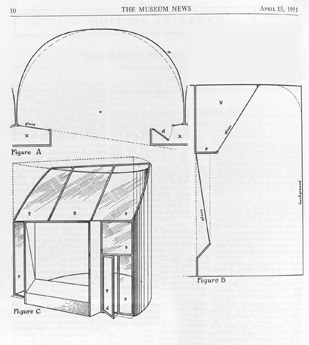
Looking into how diorama sets are constructed, should I want to make a stage set of one, say, out of paper for instance. This is from the American Natural History Museum.

Diorama as theatre:preservation of habitat or re-contextualisation?


Hannah Tinti, in the short story Preservation in Animal Crackers draws a fine line between the two, when faced with the loss and death of her father, she wants to suspend time, and considers for a moment to install him as a pastiche of his former life into a museum diorama or the challenge to her sensibilities of viewing him as an another kind of exhibit: a plastination process as demonstrated by Gunther Von Hagen, into a pastiche of Rodin's Burghers of Calais. The disturbing sensation of seeing the body of someone you love being anatomically dissected and presented for exhibition in a new context and identity is hard to comprehend.

Suspended animation and collecting.


liminal spaces:museum contents in transit